News

Pickup news and market updates from FOTON and the Tunland range.

  • The Tunland Discovery Tour: five markets, one expedition

    The Tunland Discovery Tour: five markets, one expedition

    Heritage: this covers the 2012–2013 Tunland Discovery Tour, not a new event.

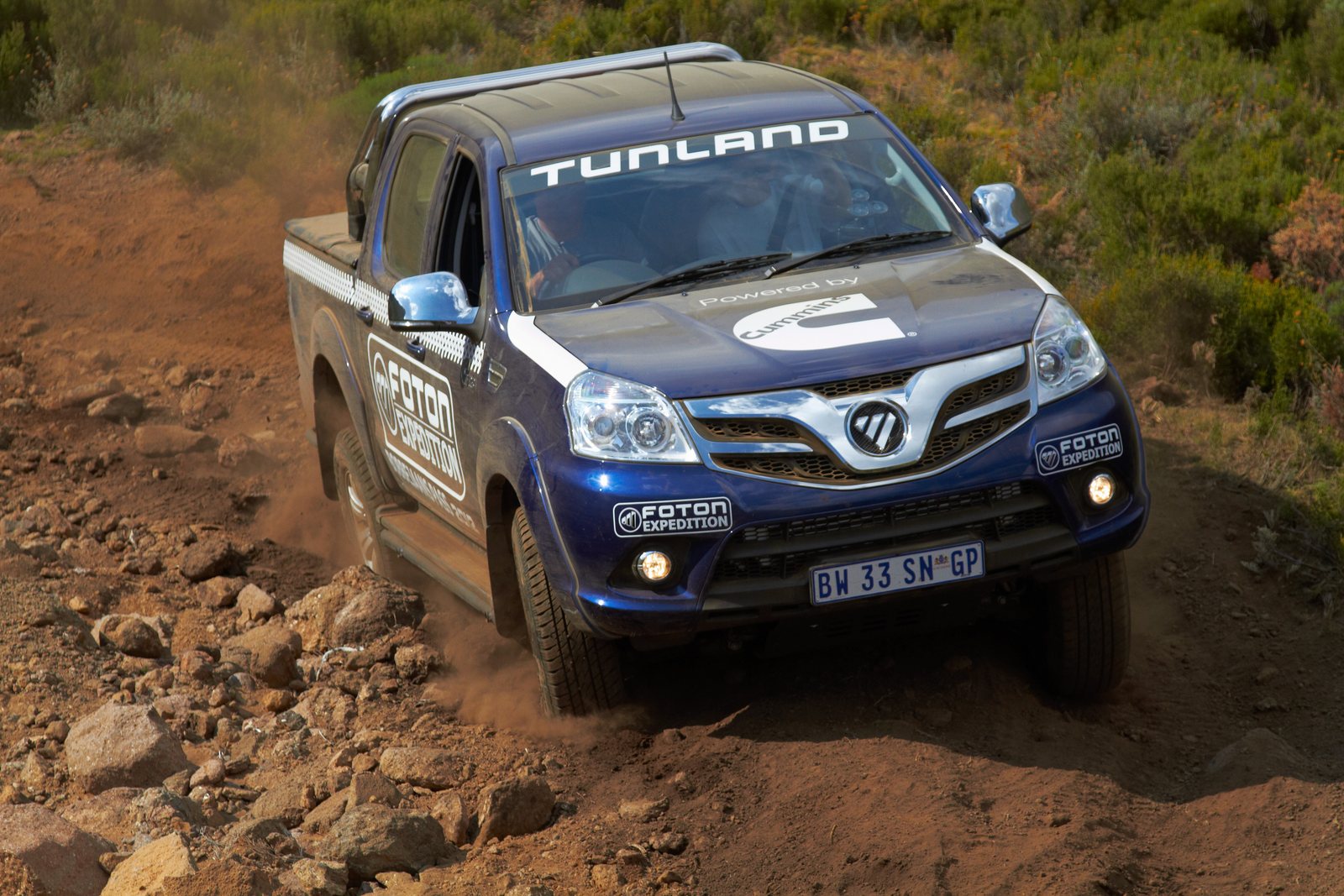
    Before the export programme was organised market by market, FOTON took the Tunland on a multi-country expedition called the Discovery Tour, running through 2012 and 2013. The legs were deliberately varied, and each one was chosen to answer a different question about the vehicle:

    • South Africa and Lesotho — the highland passes, at altitude, on gravel.
    • Australia — the red land, heat and long unsealed distances.
    • Chile — altitude and desert, in a left-hand-drive market.
    • Malaysia — the Terengganu rainforest: humidity, mud, river crossings.
    • Saudi Arabia — desert heat and dune terrain in a right-hand-drive market.

    What a tour like this is for

    A launch event shows a vehicle to journalists for a day. A tour across five markets and two hemispheres is a different proposition: it puts the same platform through altitude, humidity, desert heat, gravel and unsealed distance in sequence, in public, over months. Whatever fails is found far from a factory and has to be fixed in the field.

    For a buyer, the useful part is the coverage: the same truck was exercised in the kinds of conditions its customers actually work in — which is precisely the question an importer in Africa, Latin America or the Middle East is trying to answer before placing a container order.

    From expedition to export programme

    The tour was the precursor to the structured export programme this site documents. Today the range is built on the P3 platform and covers 57 orderable configurations — G7, V, V9, G9, the eTUNLAND electric pickup, the V7 and V9 48V diesel hybrids, and single-cab long-bed work trucks — homologated from Euro 2 to Euro VI depending on the destination market, and available in left- or right-hand drive built at the factory to order.

    Where the markets ended up

    Several of the Discovery Tour countries are now markets with dedicated guides on this site — South Africa among them, where the Tunland has since been named Bakkie of the Year. That is a reasonable measure of what a five-country expedition was for.
    See all 40 export markets →

  • Tunland at the Dakar Rally: three campaigns, 2014 to 2016

    Tunland at the Dakar Rally: three campaigns, 2014 to 2016

    Heritage: this covers the 2014, 2015 and 2016 Dakar campaigns, not a new event.

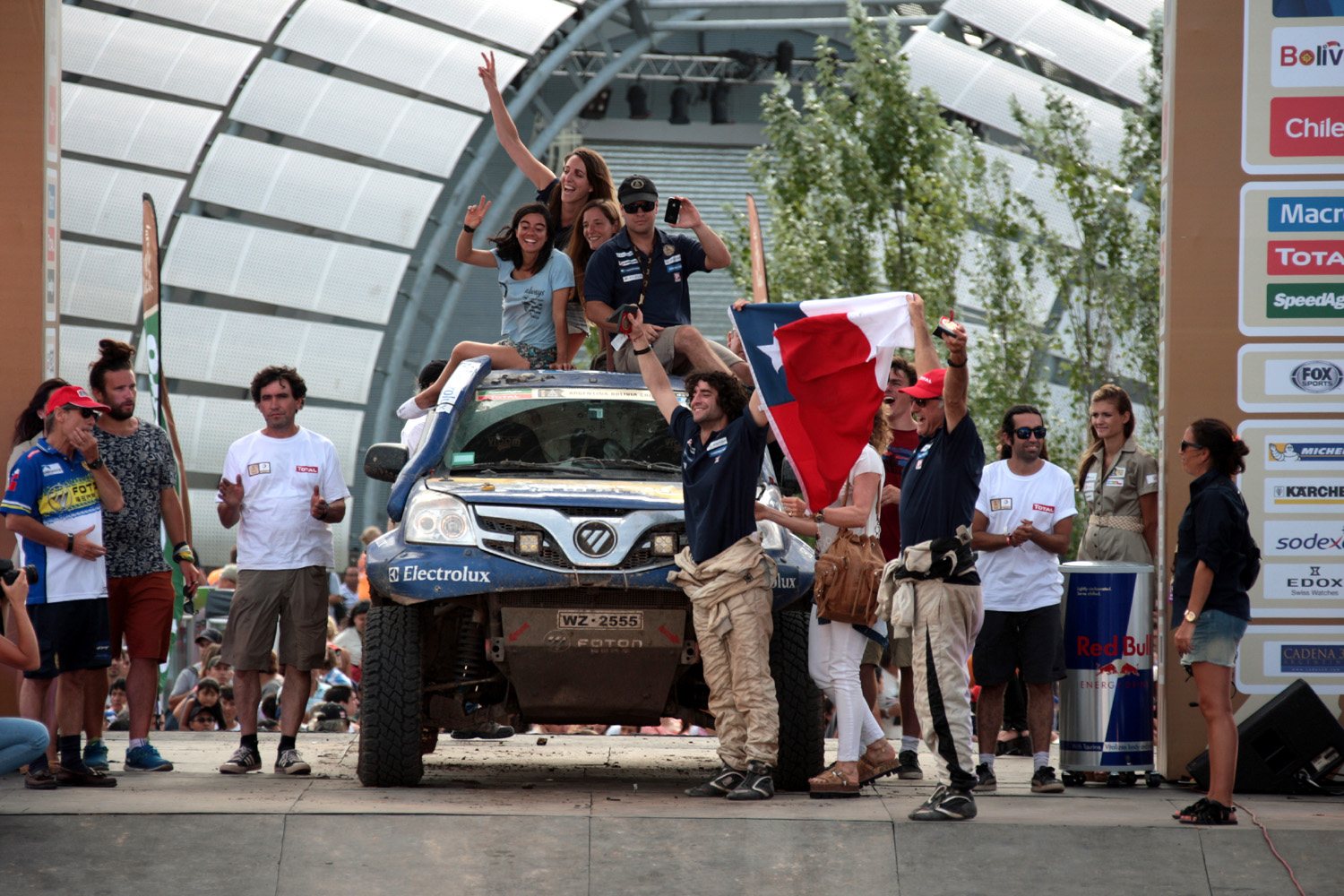
    Before the current generation of Tunland reached the export markets it ships to today, FOTON took the pickup rallying — and specifically to the Dakar, in three consecutive editions: 2014, 2015 and 2016. The photograph above is the 2015 finish-line celebration.

    What the Dakar actually tests

    The Dakar is not a circuit race. It is two weeks of dunes, rock, riverbed and altitude, with stages that run longer than a working day and vehicles that have to be repaired in the desert overnight. For a manufacturer, the value is not the trophy: it is that a fortnight of that environment finds the weaknesses that a decade of road testing does not — cooling under sustained load, chassis fatigue, suspension travel limits, electrical durability in dust.

    A pickup that has completed Dakar stages is a pickup whose cooling and chassis architecture have been taken past the design envelope deliberately, in public, with the failure mode recorded.

    Why this still matters to an importer in 2026

    The vehicles are different now — the current range is the P3-platform G7, V, V9 and G9, plus the eTUNLAND and the 48V hybrids — but the engineering culture that went rallying is the same one that has to homologate a truck for your market. When a dealer asks whether the product is built to survive a working life on bad roads, a Dakar campaign is a more useful answer than a warranty clause.

    It is also, frankly, good showroom material: it is visual, it is verifiable, and it is about the vehicle rather than the advertising budget.

    The current range

    57 orderable export configurations across six model lines, left- or right-hand drive built at the factory to order, homologated from Euro 2 through to Euro VI depending on the destination. Three units per 40′HQ for the G7, single cab and eTUNLAND; two for the V, G9 and hybrid.

    See the full Tunland range →

  • FOTON South Africa kitted a Tunland for the Cape Town Cycle Tour

    FOTON South Africa kitted a Tunland for the Cape Town Cycle Tour

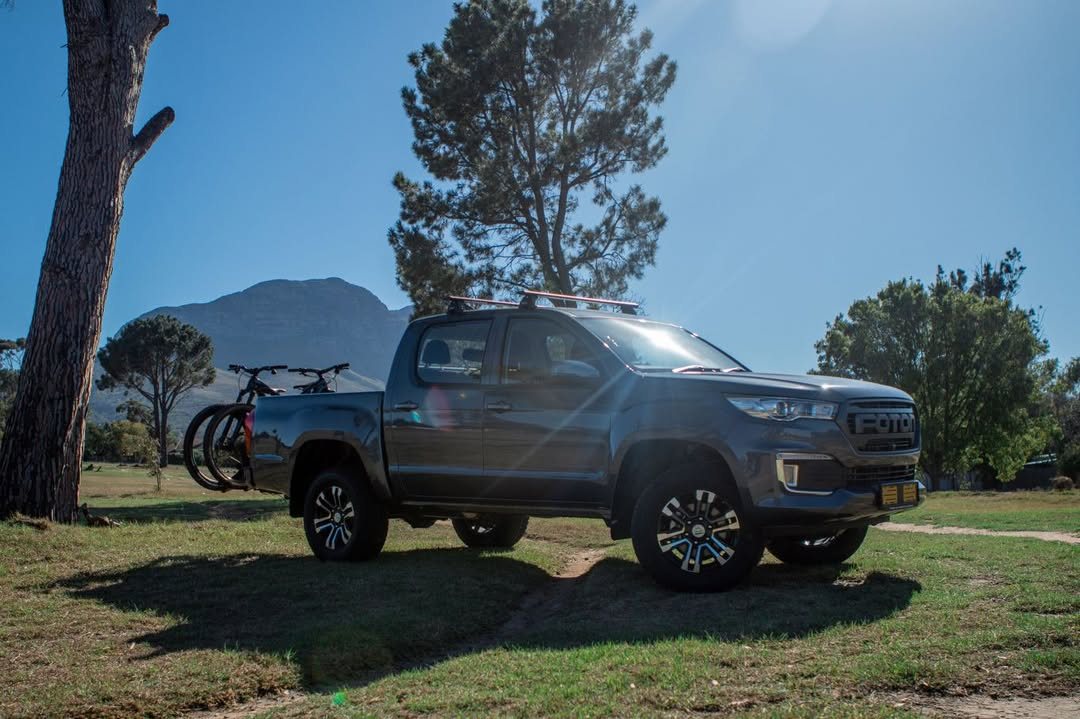
    FOTON’s South African operation put a Tunland on display at the Cape Town Cycle Tour Expo, fitted out with a bicycle carrier rather than a load bed full of cargo. The exhibit sat against the Table Mountain skyline, and the message was deliberate: this is a pickup that private buyers use, not only fleets.

    Why a cycling expo is a sensible pickup venue

    The Cape Town Cycle Tour is one of the largest timed cycling events in the world, and the people who ride it are exactly the buyers a double cab wants: households with disposable income and an expensive bicycle to move. Every one of them needs the same three things from a vehicle — a bed long enough for bikes, a rack or carrier solution that does not mark the paint, and a cab that seats the family afterwards.

    Dealers tend to default to advertising pickups on payload and torque. Events like this one reach the other half of the market, where the deciding question is whether the bike fits and whether the truck looks right outside a coffee shop. It is the same vehicle, sold on a different axis.

    What the South African market demands

    South Africa is one of the most demanding pickup markets in the world: right-hand drive is mandatory, buyers compare directly against established Japanese and American nameplates, and resale value matters almost as much as purchase price. That is also why an award won in that market carries weight — Tunland has been recognised there as Bakkie of the Year, which is the local term for pickup.

    The Tunland range sold in South Africa is the double-cab diesel line-up this site exports: the G7 as the volume workhorse, the V and V9 as premium 4×4 double cabs and the G9 as the flagship, all built right-hand drive at the factory to order rather than converted afterwards.

    The accessory point

    For importers, the practical lesson is that a pickup range sells better with a documented accessory path — carrier bars, bed liners, canopies, tow bars. Buyers who are shown a fitted vehicle buy the fitting as well, and it raises the value of every unit you land.

    Tunland for South Africa →

  • eTUNLAND: what the electric pickup actually offers

    eTUNLAND: what the electric pickup actually offers

    The eTUNLAND is the electric pickup in the Tunland range, and it is worth explaining plainly, because most electric pickups announced today are not yet orderable in export spec. This one is: five orderable configurations, sixteen export markets.

    Where it sits in the range

    FOTON builds exported pickups on three platforms. The eTUNLAND sits on the P3 platform — the same one as the Tunland G7, V and G9 — alongside the diesel and hybrid versions. That is the commercially important detail: it shares a platform with the volume models, so body parts, trim and much of the chassis architecture are common across a dealer’s range rather than being a stand-alone vehicle.

    The numbers

    • Power: 100 kW, torque: 176 N·m — lower than the 120 kW / 415 N·m diesel, which is the honest trade-off of the electric drivetrain in this class.
    • Configurations: 5 orderable export specs across 16 markets.
    • Container: three units per 40′ High Cube — the same efficiency as the G7 and the single cab, which matters because it means electrification does not cost you extra freight per truck.

    Why the electric rate matters more than the range figure

    In several markets the excise or import treatment of a vehicle driven only by an electric motor is materially different from a combustion pickup — in Kenya, for example, the excise rate is 10% for electric-only propulsion against 20–35% for combustion. That can move the landed cost more than any efficiency difference, which is why we suggest pricing the eTUNLAND alongside the diesel rather than after it.

    Where the electric pickup does not fit yet is long-distance work in markets without charging infrastructure. It fits fleets with fixed duty cycles, urban and municipal use, and markets where the tax treatment rewards it.

    Ordering

    Like every model in the range it is quoted individually against your port, quantity, emission requirement and steering side, with a firm FOB or CIF price returned.

    eTUNLAND export specifications →

  • Tunland debuts with a podium in Argentina’s TCP PickUP series

    Tunland debuts with a podium in Argentina’s TCP PickUP series

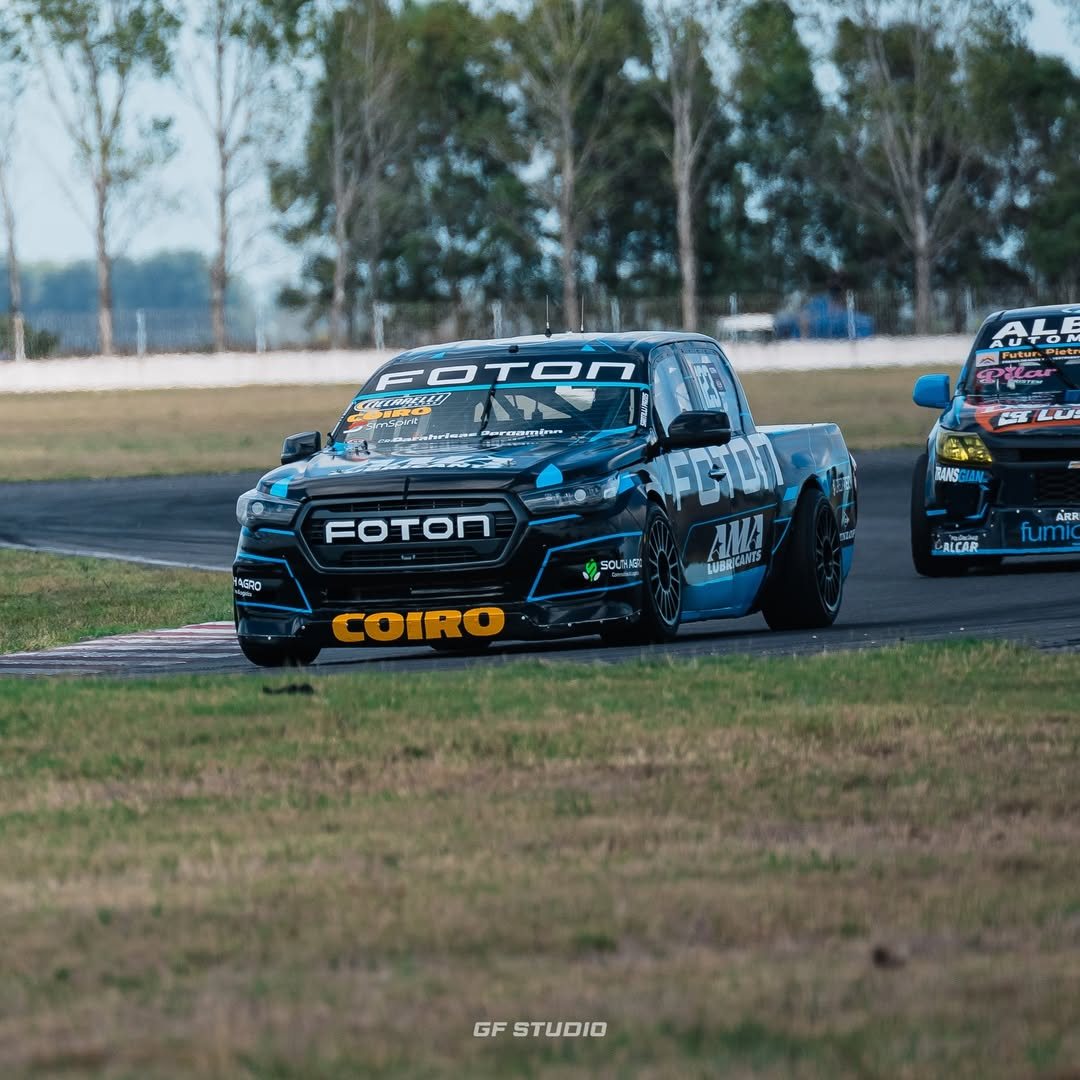
    FOTON’s Tunland has made its debut in Argentina’s TCP PickUP racing series and come away with a podium. The team’s own post reads: “P3 en la serie y P3 en una final increíble! Debut y podio con la @foton.argentina” — third in the series and third in an incredible final, on debut.

    Why a racing debut is a real product signal

    Pickup racing is not a beauty contest. A race-prepared pickup runs at sustained high load, on slicks, with repeated hard braking and cornering — conditions that find weaknesses in cooling, braking, chassis rigidity and driveline durability faster than any road test. A podium on debut means the base vehicle survived that without a fundamental problem, which is the part an importer actually cares about.

    For a dealer, the value is that racing is the one form of marketing that is difficult to fake: the results are published by the series, not by the brand.

    Argentina and the Latin American pickup market

    Argentina is one of the most competitive pickup markets in the world — it is a production base for several global manufacturers and buyers there are genuinely knowledgeable about the segment. Debuting in a national pickup series there is a deliberate choice to be measured against that standard rather than against a lower one.

    The Tunland range sold in Latin America is the double-cab diesel line-up this site exports: G7, V, V9 and G9, plus the eTUNLAND electric pickup and the V7 / V9 48V hybrids. All are available left-hand drive, which is the norm across the region.

    Using it commercially

    Motorsport results travel well in dealer conversations — they are short, verifiable and visual. If you distribute Tunland in a Latin American market, this is material worth putting on the showroom wall.

    Mercados de exportación en América Latina →

  • FOTON opens in Burgas with a two-wheel Tunland stunt

    FOTON opens in Burgas with a two-wheel Tunland stunt

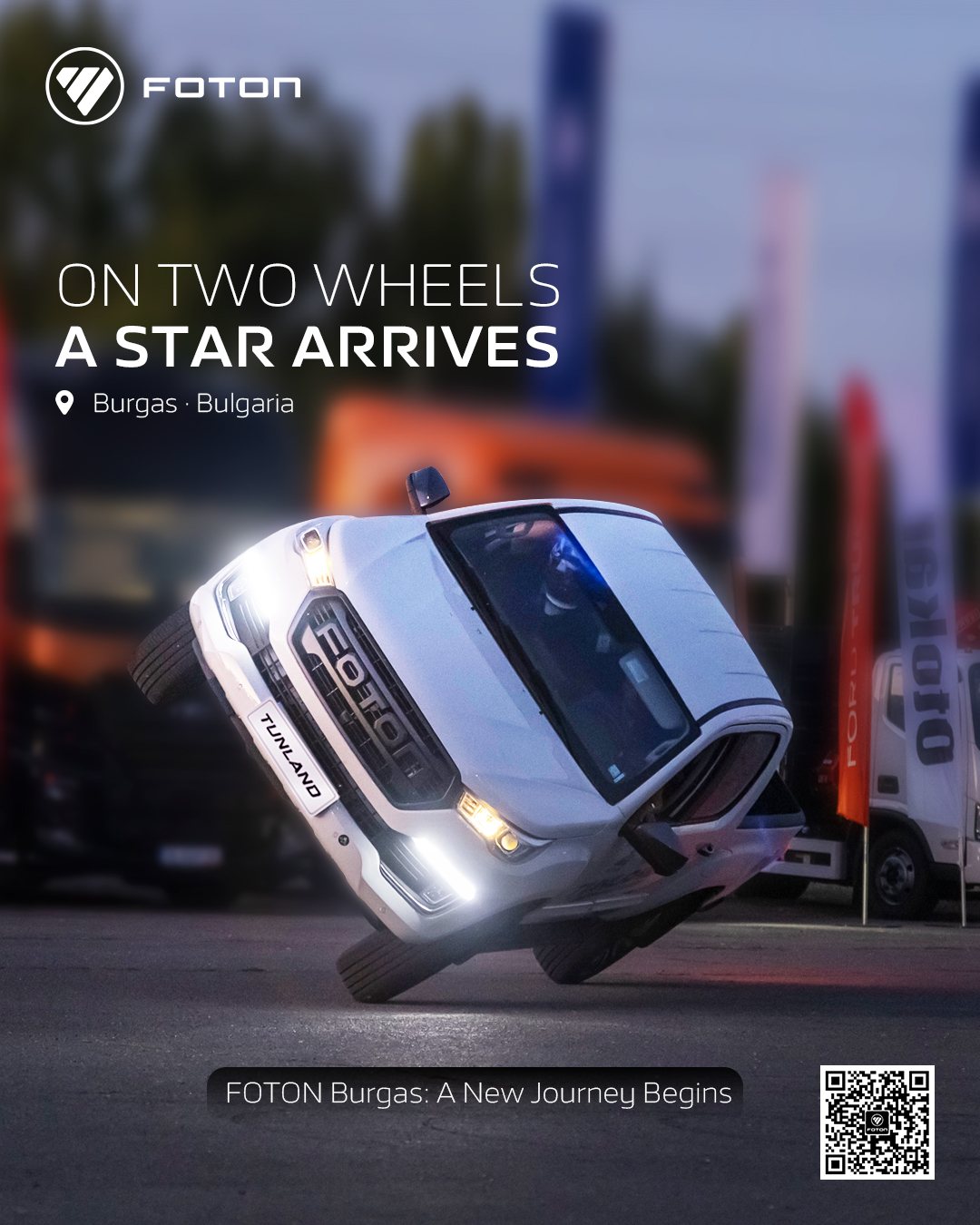
    FOTON has marked the opening of its Burgas operation in Bulgaria with a launch event built around a Tunland pickup driven on two wheels. The campaign line was “On two wheels a star arrives”, under the banner “FOTON Burgas: A New Journey Begins”.

    Why a launch in Bulgaria is worth noting

    Bulgaria is a European Union market, and that makes it a different kind of test than the export markets this site usually covers. An EU market means WVTA-type approval, Euro emission standards enforced as law rather than as a market preference, and buyers who already have a dense choice of European, Japanese and Korean pickups. A brand opening there is committing to the hardest compliance environment there is.

    The two-wheel stunt is marketing, but the vehicle underneath it is the same Tunland that ships to Africa, Latin America and the Middle East — and the willingness to put a production pickup through that in public is a statement about chassis and steering strength rather than about advertising budget.

    The range behind it

    The Tunland export range covers 57 orderable configurations across the Tunland G7 (the volume workhorse, 23 configurations, 110 markets), the Tunland V and V9 (premium 4×4 double cabs), the G9 flagship, the eTUNLAND electric pickup, the V7 and V9 48V diesel hybrids, and single-cab long-bed work trucks. All of them are built left- or right-hand drive at the factory to order.

    What an EU entry means for buyers elsewhere

    It is a useful reference point: the same platform that has to satisfy an EU regulator is the one being exported to markets with lighter requirements. That is not a reason to over-specify, but it is a reasonable answer to a dealer who asks whether the product is built to a European standard.

    See all export markets →

  • Tunland V9 third in International Pick-up Awards 2026

    Tunland V9 third in International Pick-up Awards 2026

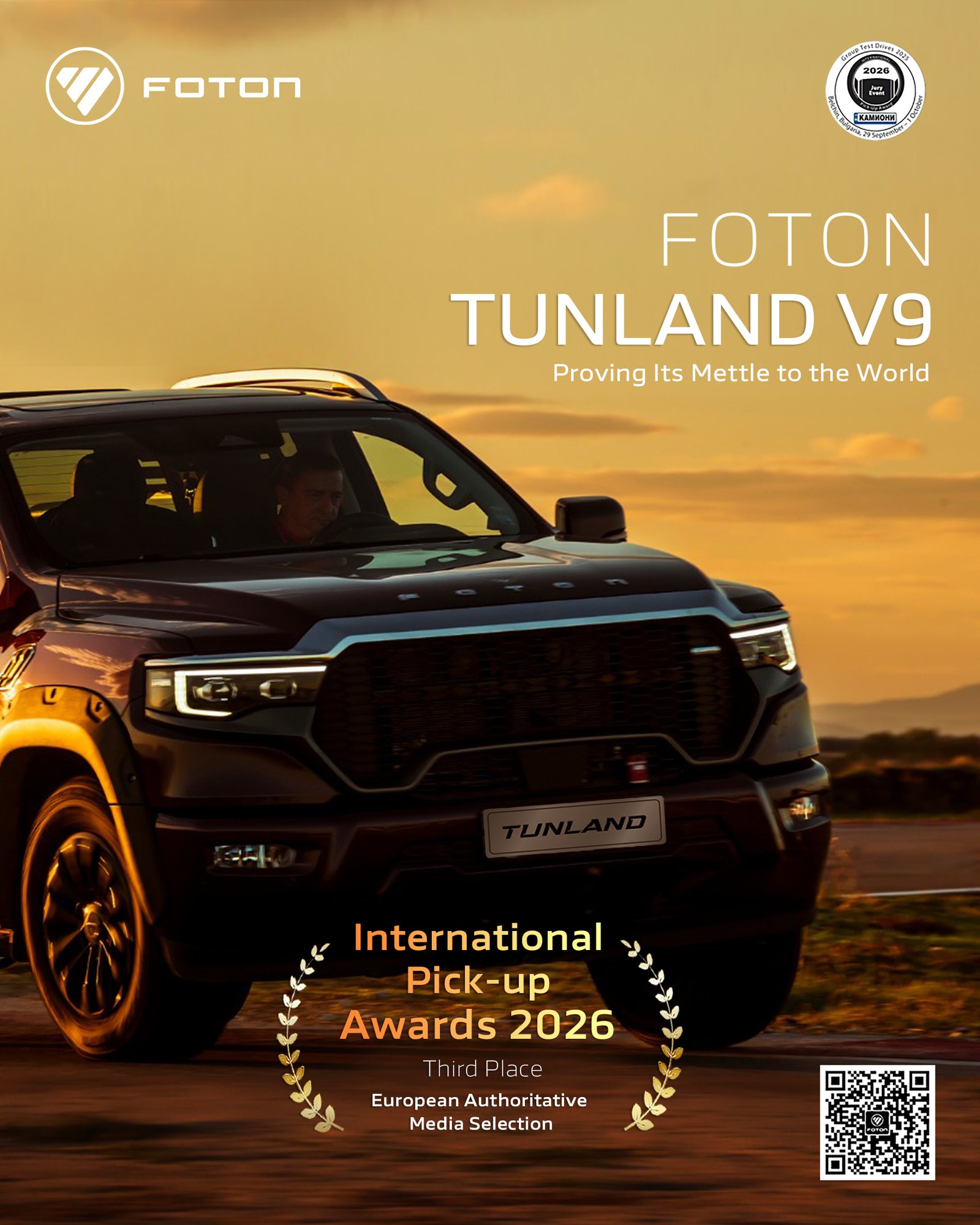
    The FOTON Tunland V9 has taken third place in the International Pick-up Awards 2026, in the award’s European Authoritative Media Selection category. FOTON’s own announcement reads “Proving Its Mettle to the World”.

    What the result actually says

    It is a podium place, not a win, and that distinction matters: it is reported here exactly as FOTON published it. What makes a third place in this particular category meaningful is who is doing the judging — the European authoritative media panel — because European pickup buyers are the hardest to convince on refinement, emissions compliance and on-road behaviour rather than on price alone.

    For an exporter selling into Africa, Latin America and the Middle East, the practical value is that it is a European-sourced endorsement that can be cited anywhere. When a dealer is asked whether a Chinese pickup is “really comparable now”, a European media podium is a shorter answer than a specification sheet.

    Why the V9 in particular

    The V9 is the long-wheelbase, higher-specification double cab in the Tunland range — the version built for buyers who compare it against established Japanese and American pickups rather than against other Chinese products. It is offered for export in left- and right-hand drive, homologated to the emission standard the destination market accepts, and shares the P3 platform with the G7 and V, which keeps parts common across a dealer’s whole fleet.

    What it does not change

    Nothing about the vehicle, the price or the lead time. It is a third-party judgement, and the useful thing to do with it is cite it — on showroom material, in a tender response, or in the first email to a new dealer.

    Tunland V9 / G9 export specifications →

  • Inside the Tunland G7: what the P3 platform gives you

    Inside the Tunland G7: what the P3 platform gives you

    The Tunland G7 is the volume-selling pickup of the range, and most of what makes it commercially useful comes from the platform underneath it. FOTON’s own overseas product introduction sets the figures out clearly, so here they are without the marketing.

    Three platforms, three jobs

    FOTON builds exported pickups on three platforms. The P2 platform is the tool category — the older Tunland S and E, now being phased out. The P3 platform is the multifunctional and passenger category, and it is where the current range sits: Tunland G7, Tunland V, Tunland G9, the V7 and V9 hybrids, and the eTUNLAND electric pickup. The P4 platform is the larger, passenger-focused pickup and is a later product.

    That matters to a dealer because P3 is the platform with the volume behind it — parts commonality across G7, V and G9 is a direct after-sales advantage.

    The G7 in numbers

    • Body: 5,340 × 1,940 × 1,870 mm (1,880 mm for some variants), double or single cab.
    • Cargo box: double cab 1,520 × 1,580 × 440 mm; single cab 2,315 × 1,580 × 440 mm — the long-bed version carries a full metre more load length.
    • Wheelbase: 3,110 mm, with 955 mm front and 1,275 mm rear overhang.
    • Ground clearance: 210 mm, with a 28° approach and 19° departure angle.
    • Drive: 4×2 or 4×4, diesel, 120 kW and 415 N·m.
    • Wheels: 16-inch on 245/70R16, 17-inch on 265/65R17, 18-inch on 265/60R18.

    Why 1,940 mm body width is the number to notice

    It is the widest in its class, and width is the dimension that decides whether three adults fit in the back of a double cab on a working day. For a fleet buyer choosing between a workhorse and a crew vehicle, that single figure often settles the decision before payload is even discussed.

    Container maths

    The G7 is one of the models that loads three units per 40′ High Cube — with the single cab and the eTUNLAND. The V, G9 and hybrid load two. On a 20-unit order that is seven containers instead of ten, which is why it is the model we usually recommend first unless the specification genuinely calls for something else.

    Tunland G7 export specifications →

  • FOTON takes the Tunland hybrid to Bogotá

    FOTON takes the Tunland hybrid to Bogotá

    FOTON has presented the Tunland hybrid in Bogotá, adding Colombia to the list of markets where the hybrid powertrain is being shown to dealers and fleet buyers. The launch material is part of FOTON’s own market-event archive.

    What the Tunland hybrid actually is

    It is a 48V mild hybrid, not a plug-in. The system pairs the 2.0 L 4F20 diesel with a belt-driven starter-generator: 120 kW and up to 450 N·m combined, with a six-speed manual or the ZF 8AT, and Euro 6e depending on the market. It recovers braking energy, assists the engine under acceleration and keeps the 12 V system supplied — and it needs no external charging, which matters in markets where charging infrastructure is thin.

    The hybrid uses the same V7 and V9 body as the diesel V series. The difference is the powertrain, not the sheet metal.

    Why mild hybrid makes sense in Latin America first

    Three reasons. It needs no charging network, so it works in any city today. It reduces fuel burn in exactly the duty cycle that hurts most — stop-start urban delivery and loaded hill starts. And in several markets the tax treatment of electrified drive differs from pure combustion, which can move the landed cost of the same truck.

    It is also not the same product as the plug-in hybrid. The P4 PHEV (350 kW / 800 N·m, 32.85 kWh, ~100 km electric range) is a later vehicle and is not orderable today — worth saying plainly, because buyers who hear “hybrid” often assume the plug-in.

    Ordering it

    The hybrid is built on request, in left- or right-hand drive, homologated to the emission standard your market accepts. It is worth pricing alongside the diesel rather than after it: in some markets the two land closer than expected once tax treatment is included.

    Pickups for Colombia →

  • FOTON Tunland named Bakkie of the Year in South Africa

    FOTON Tunland named Bakkie of the Year in South Africa

    FOTON’s Tunland pickup has been named Bakkie of the Year in South Africa — one of the most closely watched pickup awards in Africa. The result was announced by FOTON’s own global channel in November 2024.

    Why a South African award matters beyond South Africa

    “Bakkie” is the South African word for pickup, and the South African market is one of the toughest in the world for them: buyers there compare load capacity, gravel-road durability and resale value against established Japanese and American nameplates, and they punish anything that cannot take a working life of abuse. An award decided in that market is a stronger signal than a launch event, because it is a judgement about the vehicle rather than about the marketing.

    For importers in neighbouring markets the practical consequence is simple: it is evidence you can cite. When a dealer in Zambia, Zimbabwe, Botswana or Namibia is asked why they stock Tunland rather than another Chinese pickup, “it won Bakkie of the Year in South Africa” answers the question in one line.

    Which Tunland the award covers

    The Tunland range sold in Southern Africa is the double-cab diesel line-up that this site exports: the Tunland G7 as the volume workhorse (120 kW / 415 N·m, 23 orderable export configurations), the Tunland V as the premium 4×4 double cab (17 configurations), and the G9 as the flagship. All are available in right-hand drive, produced that way at the factory rather than converted afterwards — which is the only form that can be registered in South Africa and most of its neighbours.

    What it changes for a buyer

    Nothing about the vehicle, and a useful amount about the conversation. Awards of this kind are usually the cheapest resale support a dealer can get: they shorten the explanation, they support the asking price, and they make the first service conversation easier. If you are ordering for a Southern African dealer, it is worth asking us for the award reference so that it can go on the showroom material.

    Tunland for South Africa →

Chat on WhatsApp