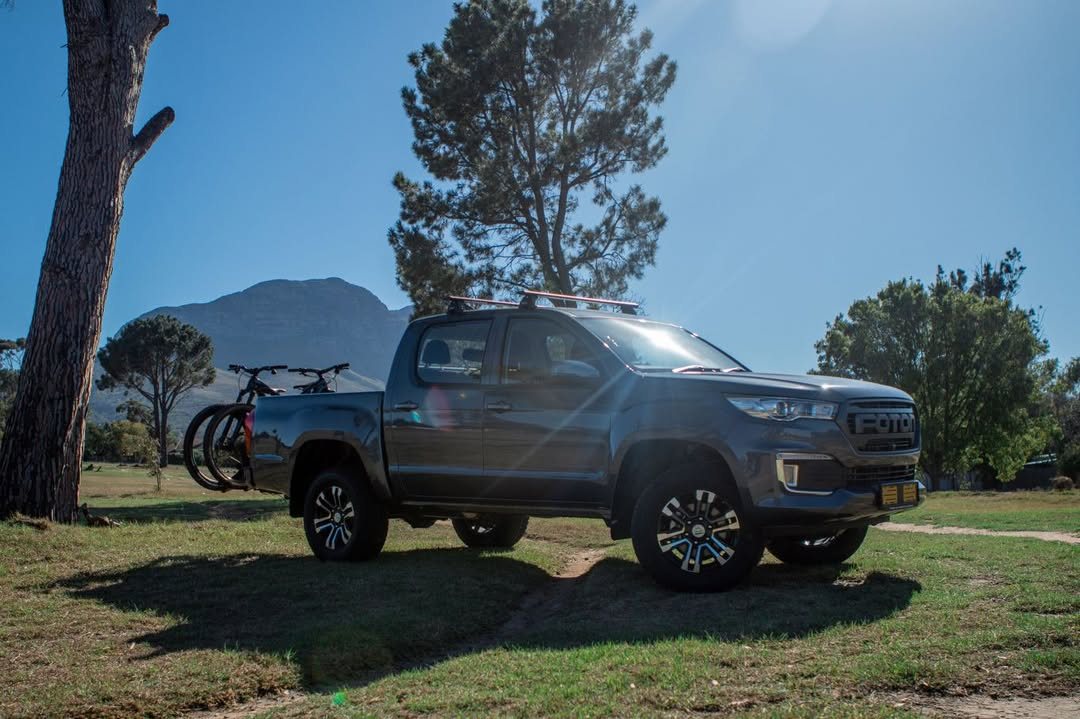
FOTON’s South African operation put a Tunland on display at the Cape Town Cycle Tour Expo, fitted out with a bicycle carrier rather than a load bed full of cargo. The exhibit sat against the Table Mountain skyline, and the message was deliberate: this is a pickup that private buyers use, not only fleets.
Why a cycling expo is a sensible pickup venue
The Cape Town Cycle Tour is one of the largest timed cycling events in the world, and the people who ride it are exactly the buyers a double cab wants: households with disposable income and an expensive bicycle to move. Every one of them needs the same three things from a vehicle — a bed long enough for bikes, a rack or carrier solution that does not mark the paint, and a cab that seats the family afterwards.
Dealers tend to default to advertising pickups on payload and torque. Events like this one reach the other half of the market, where the deciding question is whether the bike fits and whether the truck looks right outside a coffee shop. It is the same vehicle, sold on a different axis.
What the South African market demands
South Africa is one of the most demanding pickup markets in the world: right-hand drive is mandatory, buyers compare directly against established Japanese and American nameplates, and resale value matters almost as much as purchase price. That is also why an award won in that market carries weight — Tunland has been recognised there as Bakkie of the Year, which is the local term for pickup.
The Tunland range sold in South Africa is the double-cab diesel line-up this site exports: the G7 as the volume workhorse, the V and V9 as premium 4×4 double cabs and the G9 as the flagship, all built right-hand drive at the factory to order rather than converted afterwards.
The accessory point
For importers, the practical lesson is that a pickup range sells better with a documented accessory path — carrier bars, bed liners, canopies, tow bars. Buyers who are shown a fitted vehicle buy the fitting as well, and it raises the value of every unit you land.