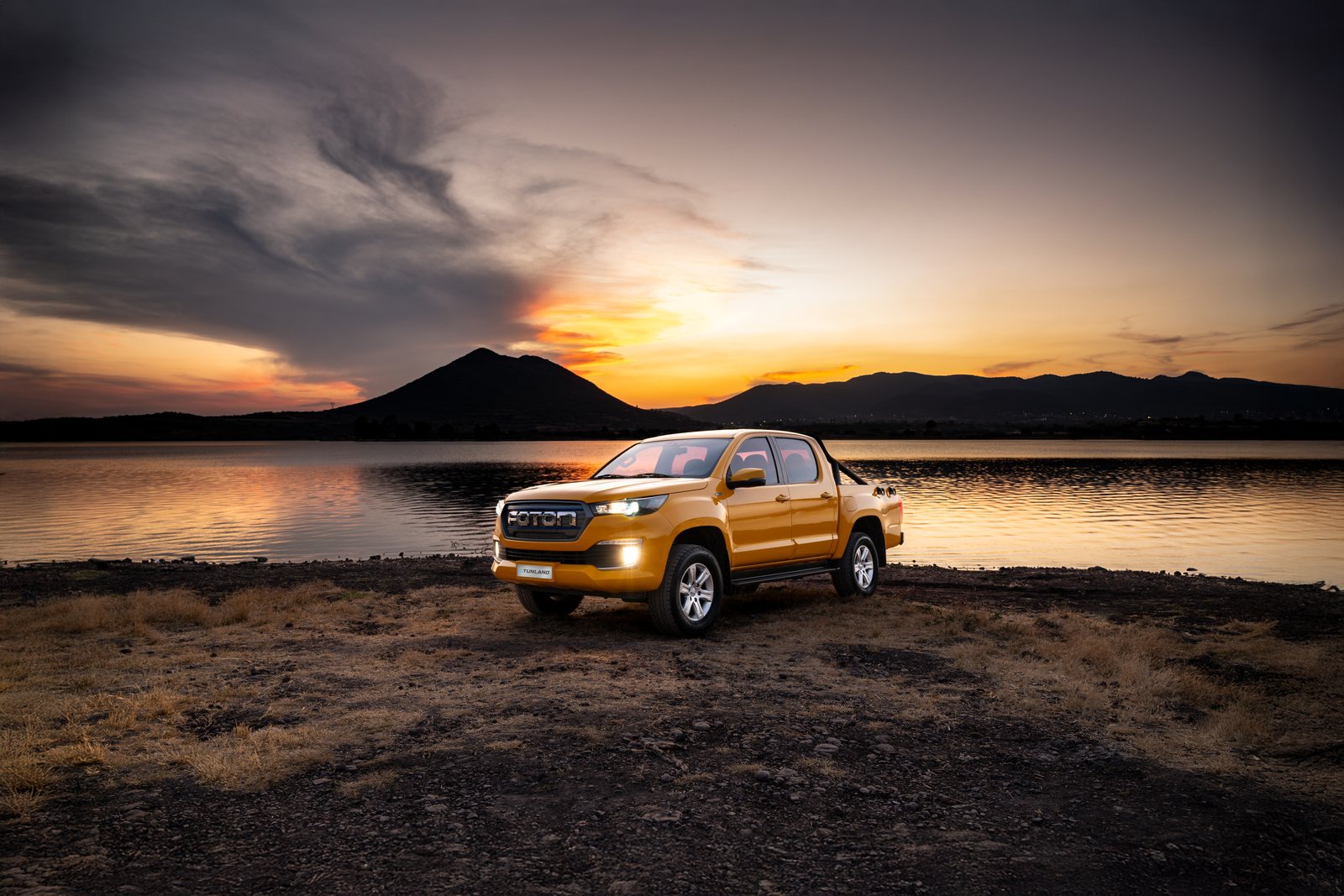
What is the eTUNLAND electric pickup, and can it actually be ordered for export?
The eTUNLAND is the electric pickup in the Tunland range, and unlike most electric pickups announced today it is orderable in export spec: five orderable configurations across sixteen export markets. It sits on the P3 platform — the same platform as the Tunland G7, V and G9 — so body parts, trim and much of the chassis architecture are shared with the volume models instead of being a stand-alone vehicle.
It produces 100 kW and 176 N·m, against the diesel's 120 kW and 415 N·m, which is the honest trade-off of an electric drivetrain in this class. A 40′ High Cube still takes three units, the same as the G7 and the single cab, so electrification does not add freight cost per truck.
The decisive number for importers is often the tax treatment rather than the range: in several markets a vehicle driven only by an electric motor is taxed differently — in Kenya, for example, 10% excise on electric-only propulsion against 20–35% for combustion pickups — which can change the landed cost substantially.
The eTUNLAND is the electric pickup in the Tunland range, and it is worth explaining plainly, because most electric pickups announced today are not yet orderable in export spec. This one is: five orderable configurations, sixteen export markets.
Where it sits in the range
FOTON builds exported pickups on three platforms. The eTUNLAND sits on the P3 platform — the same one as the Tunland G7, V and G9 — alongside the diesel and hybrid versions. That is the commercially important detail: it shares a platform with the volume models, so body parts, trim and much of the chassis architecture are common across a dealer’s range rather than being a stand-alone vehicle.
The numbers
- Power: 100 kW, torque: 176 N·m — lower than the 120 kW / 415 N·m diesel, which is the honest trade-off of the electric drivetrain in this class.
- Configurations: 5 orderable export specs across 16 markets.
- Container: three units per 40′ High Cube — the same efficiency as the G7 and the single cab, which matters because it means electrification does not cost you extra freight per truck.
Why the electric rate matters more than the range figure
In several markets the excise or import treatment of a vehicle driven only by an electric motor is materially different from a combustion pickup — in Kenya, for example, the excise rate is 10% for electric-only propulsion against 20–35% for combustion. That can move the landed cost more than any efficiency difference, which is why we suggest pricing the eTUNLAND alongside the diesel rather than after it.
Where the electric pickup does not fit yet is long-distance work in markets without charging infrastructure. It fits fleets with fixed duty cycles, urban and municipal use, and markets where the tax treatment rewards it.
Ordering
Like every model in the range it is quoted individually against your port, quantity, emission requirement and steering side, with a firm FOB or CIF price returned.