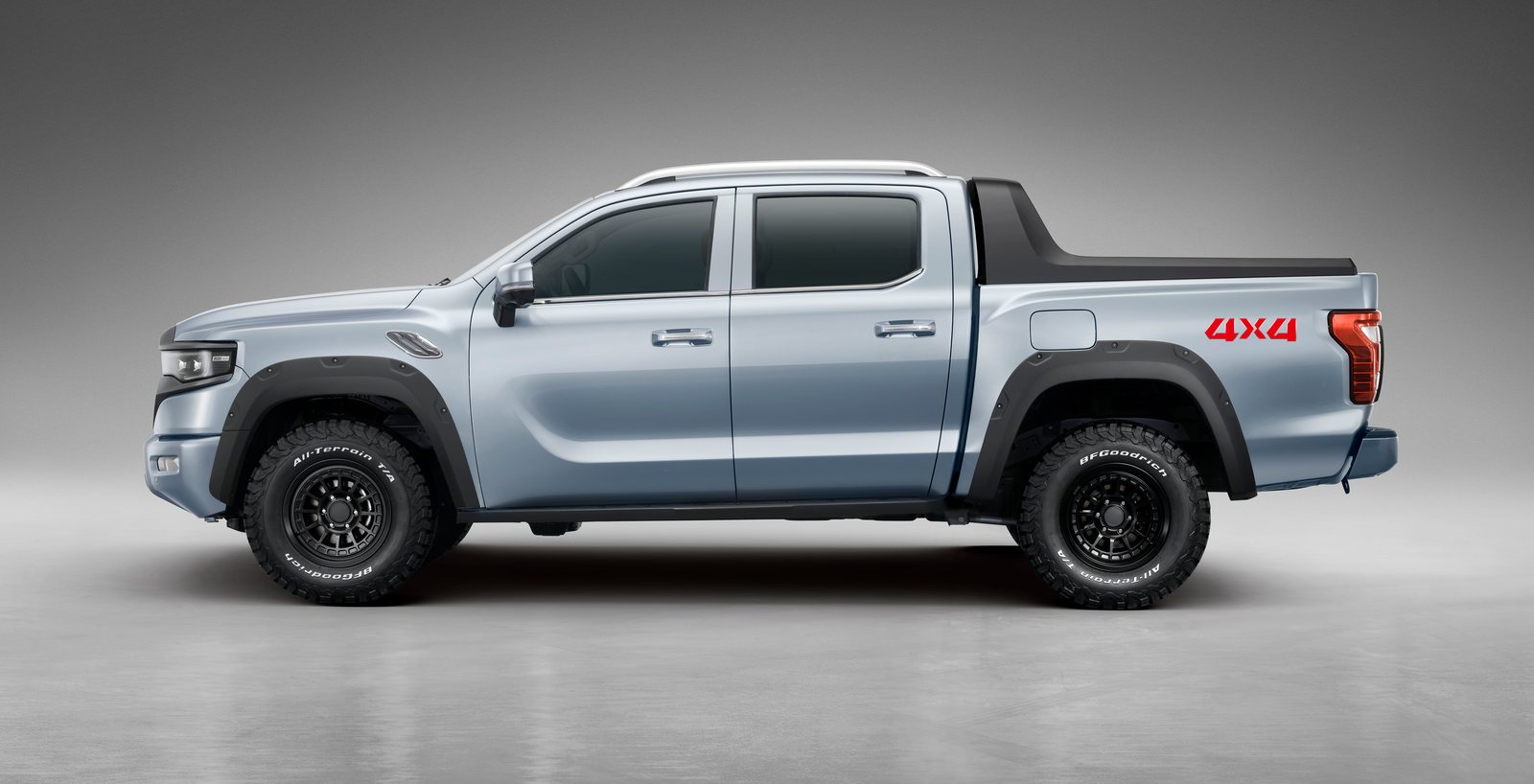
FOTON has presented the Tunland hybrid in Bogotá, adding Colombia to the list of markets where the hybrid powertrain is being shown to dealers and fleet buyers. The launch material is part of FOTON’s own market-event archive.
What the Tunland hybrid actually is
It is a 48V mild hybrid, not a plug-in. The system pairs the 2.0 L 4F20 diesel with a belt-driven starter-generator: 120 kW and up to 450 N·m combined, with a six-speed manual or the ZF 8AT, and Euro 6e depending on the market. It recovers braking energy, assists the engine under acceleration and keeps the 12 V system supplied — and it needs no external charging, which matters in markets where charging infrastructure is thin.
The hybrid uses the same V7 and V9 body as the diesel V series. The difference is the powertrain, not the sheet metal.
Why mild hybrid makes sense in Latin America first
Three reasons. It needs no charging network, so it works in any city today. It reduces fuel burn in exactly the duty cycle that hurts most — stop-start urban delivery and loaded hill starts. And in several markets the tax treatment of electrified drive differs from pure combustion, which can move the landed cost of the same truck.
It is also not the same product as the plug-in hybrid. The P4 PHEV (350 kW / 800 N·m, 32.85 kWh, ~100 km electric range) is a later vehicle and is not orderable today — worth saying plainly, because buyers who hear “hybrid” often assume the plug-in.
Ordering it
The hybrid is built on request, in left- or right-hand drive, homologated to the emission standard your market accepts. It is worth pricing alongside the diesel rather than after it: in some markets the two land closer than expected once tax treatment is included.